
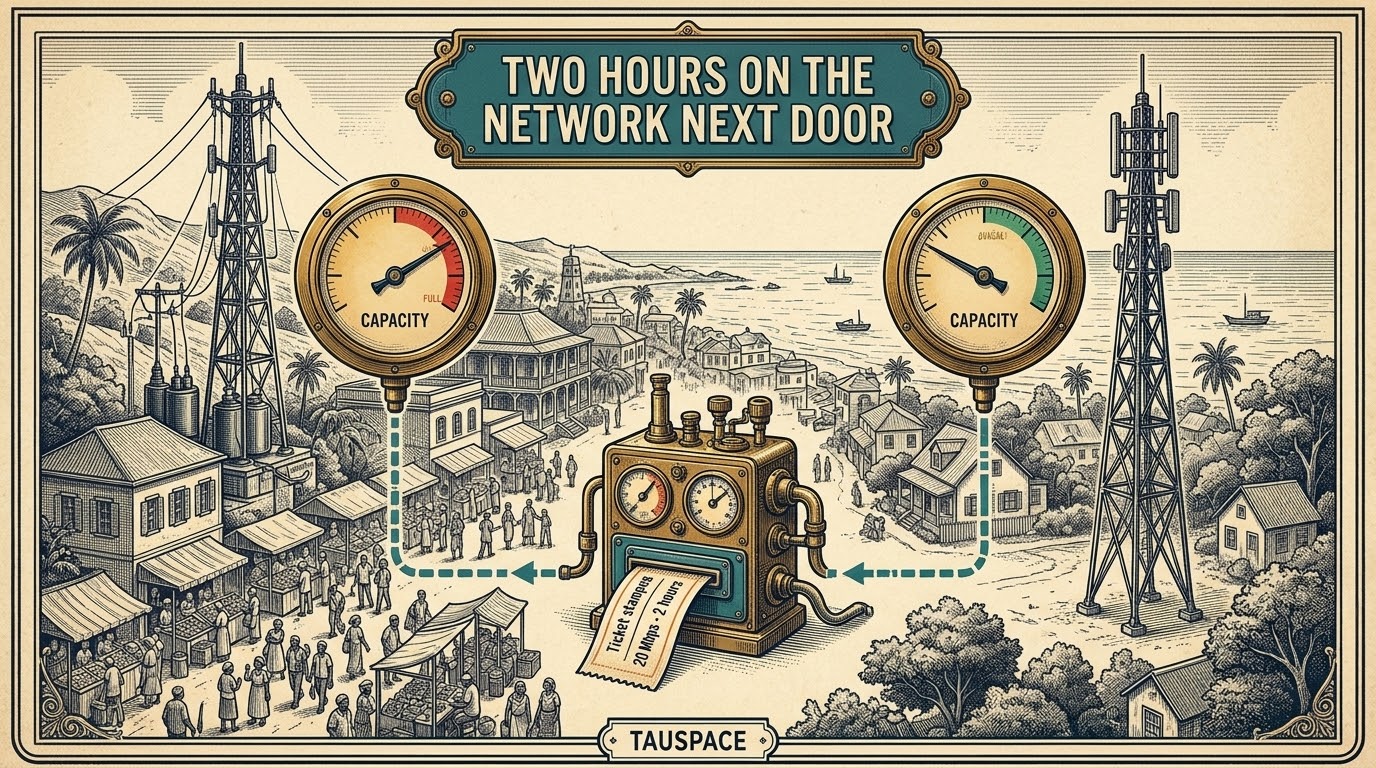
In our simulation, a power cut hits Souillac, Mauritius, at noon. One operator loses grid power. Two neighbouring operators have enough radio capacity to carry the traffic. That sounds like a good time to switch off the diesel generator. Try it in the simulator and you’ll see the catch. All 350 Mbps still need the first operator’s backhaul to reach their destination. Someone has to keep that site powered.
In Copenhagen, our OmniBOSS Phase III Catalyst explored how operators could keep customers connected during a regional outage and reconcile the bill afterwards. Our new Catalyst, Dynamic sustainable resource composability (DSRC), C26.5.1006, asks when it pays to buy from a neighbour in everyday operations. Planned maintenance or a busy afternoon in one part of town can be reason enough to ask for 20 Mbps for two hours. Read the Copenhagen article.
Would you make the trade?
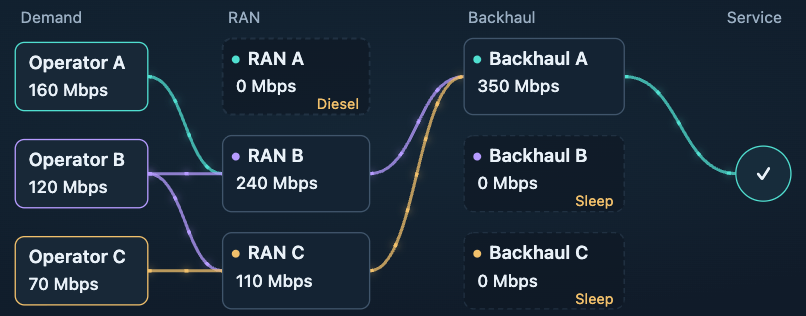
The 48-hour comparisons that follow are synthetic: modelled networks, modelled demand, modelled prices. In the business simulator, you can run the same 48 hours three ways. Each operator can use its own network, share on a schedule, or decide as conditions change. In the simulated Souillac power cut, a fixed schedule captures about 96% of the modelled saving. Deciding at runtime reduces cost by a further 0.6% against that schedule.
A separate purchasing experiment, also synthetic, changes who has the cheapest capacity. Two suppliers take turns offering the better price. Buying against current offers reduces the operators’ combined cost by 14.5% against scheduled sharing, with all demand served. Yet one supplier earns less than it would on the schedule. All figures here are synthetic, but they expose a question the partners will have to answer across a table. What price gives each of them a reason to sign?
Could you deliver what you offered?
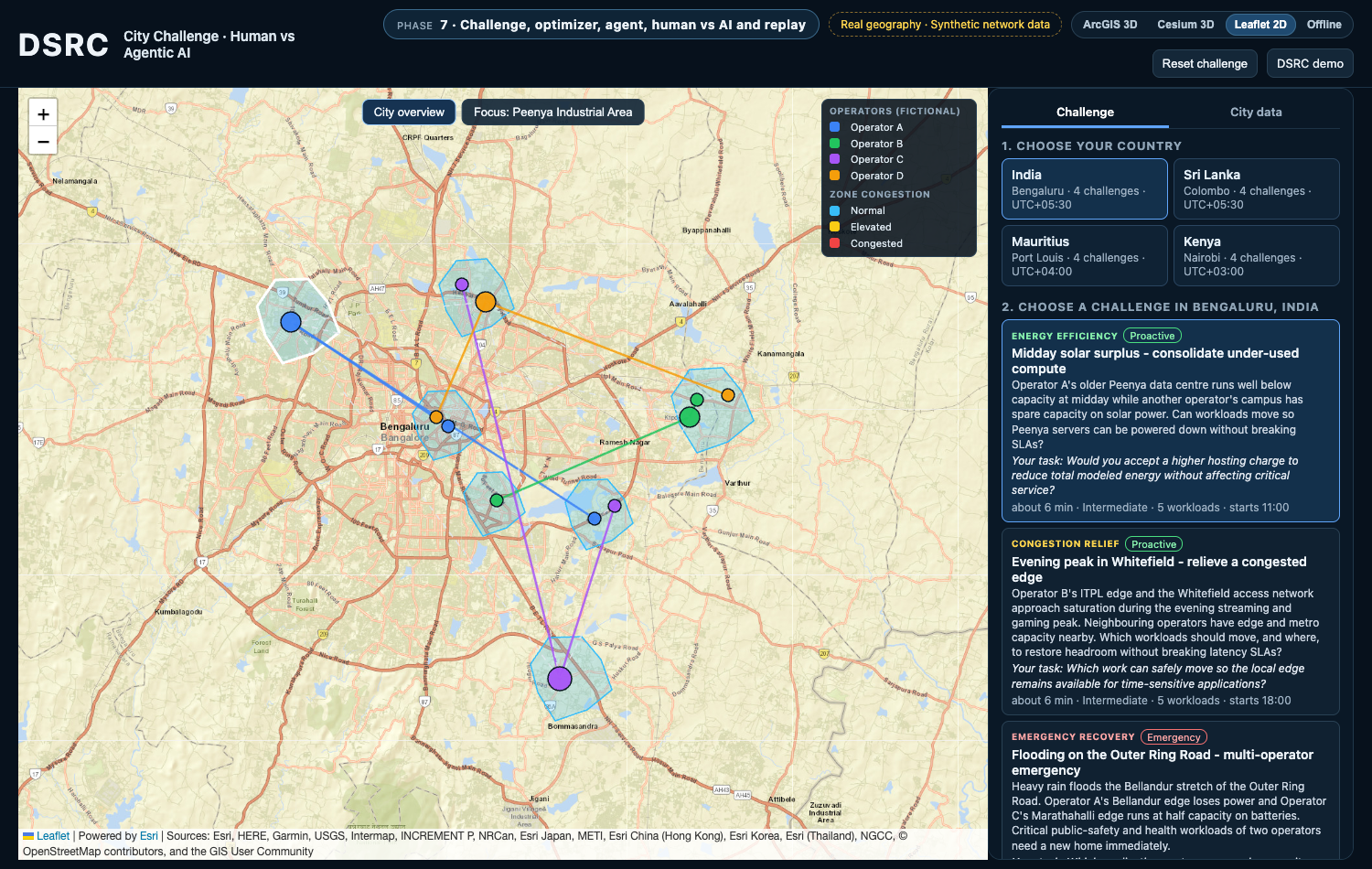
The partner team’s operations demo puts you in Bengaluru’s Peenya Industrial Area. One operator has spare compute capacity running on solar power. You decide whether moving workloads there is worth a higher hosting charge, given the service commitments you still have to meet. The city map uses real geography and simulated network conditions. You can replay your choice and compare it with the optimiser’s decision.
The fulfilment walkthrough starts with one operator publishing a requirement. A neighbour offers a service and a price. Once the buyer accepts, the demo illustrates how an intent-based service order moves through provisioning. An operator could give its agent authority to buy within an agreed budget and leave exceptions for a person to decide.
Getting the service running matters to the bill. If one operator reserves radio capacity for four hours and another delivers usable backhaul for only three, which hours should the buyer pay for? The proposed Inter-Operator Dynamic Settlement Protocol ties each supplier’s charge to the agreed terms and the delivery record. To explore the operational side, choose DSRC OSS Demo under Demonstration on the TM Forum project page.
Join us in Bangkok
TAUSPACE and Enghouse Networks are working with operator champions Mauritius Telecom, Safaricom and SLT-Mobitel. Find us at kiosk i-9 in the Innovation Zone throughout the event, and on the Impact Stage on 17 November at 17:00 Bangkok time (ICT, UTC+7), where the team presents the Catalyst. Bring one recurring problem from your network. We’d like to work through what a neighbour could supply, what spending you could actually avoid and which records would tell both operators whether the deal paid.