


Home
TAUSPACE
TAUSPACE
  • Home
Talk to us

Telecoms · Cybersecurity · IoT · IoT Fraud · Network Optimisation · Telco Risk Services

The Internet of Fraudulent Things: Mitigating the Risks for Telecoms

IoT expansion creates new cybersecurity vulnerabilities in telecommunications networks, from botnets and unauthorized access to SIM swapping and roaming abuse.

Written By
Industry Analyst Team
Publish Date
March 21, 20243 min read
Share

The Internet of Fraudulent Things: Mitigating the Risks for Telecoms

Understanding IoT Fraud

The Internet of Things has transformed connectivity across devices, from smart homes to industrial sensors. However, this expansion creates new cybersecurity vulnerabilities in telecommunications networks.

IoT Fraud refers to exploiting weaknesses in IoT devices to conduct fraudulent activities within telecom networks. These attacks range from unauthorized access and data theft to resource abuse and service disruption.

Common IoT Fraud Attacks in Telecoms

  1. Botnets: Compromised IoT devices become tools for large-scale DDoS attacks
  2. Unauthorised Access: Criminals exploit vulnerabilities to steal sensitive information
  3. SIM Swapping: Fraudsters manipulate IoT endpoints to transfer phone numbers to new SIM cards
  4. Roaming Abuse: Compromised devices generate fraudulent international charges
  5. Malware Spreading: IoT devices serve as vectors for distributing malware
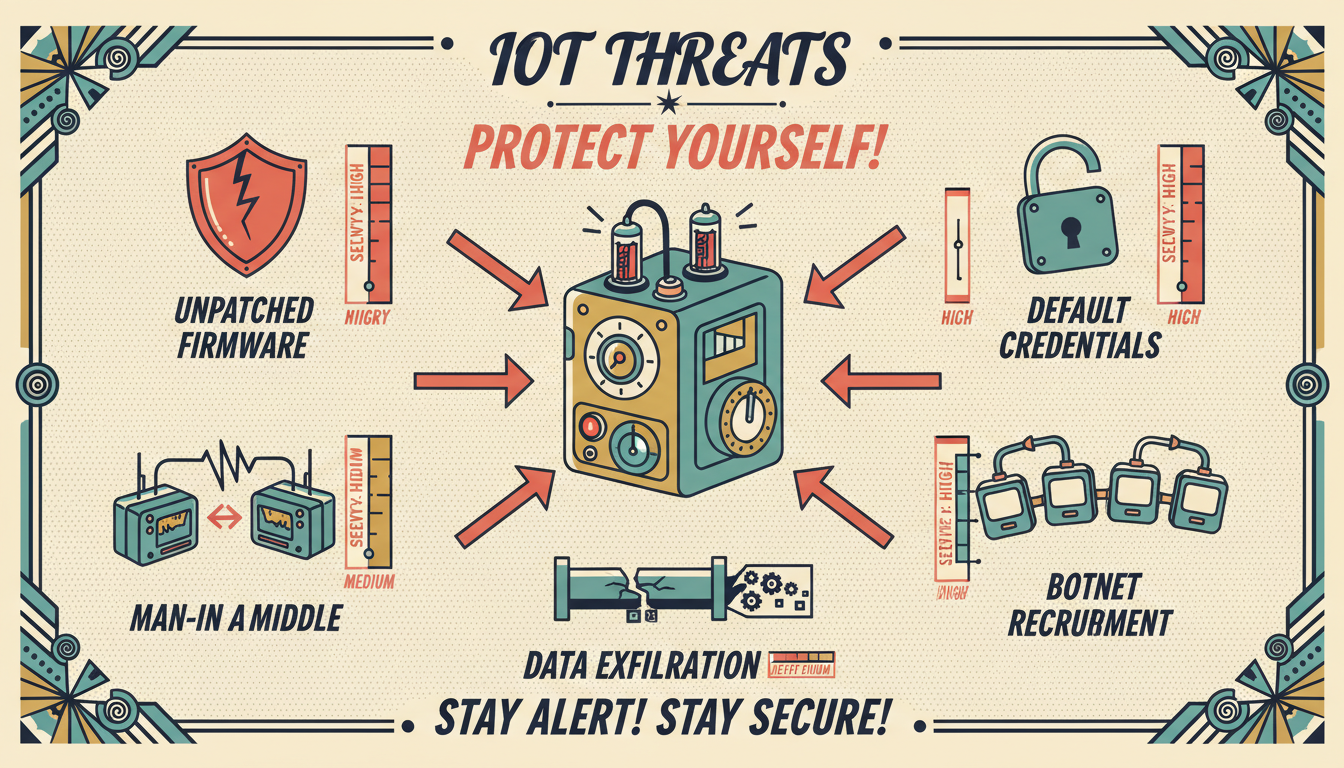
A retro-futuristic attack vector diagram showing five threats targeting IoT devices: Default Credentials, Unpatched Firmware, Man-in-Middle, Botnet Recruitment, and Data Exfiltration

Challenges for Telecom Providers

  • Massive attack surface from billions of connected devices
  • Insecure device design prioritizing speed over security
  • Risk to wider networks from compromised customer devices
  • Exposure of vast amounts of collected customer data
  • Potential damage to brand reputation and customer trust

Mitigation Strategies

Strong IoT Device Security Baselines — Vendor risk assessments, prompt security updates, strong password enforcement
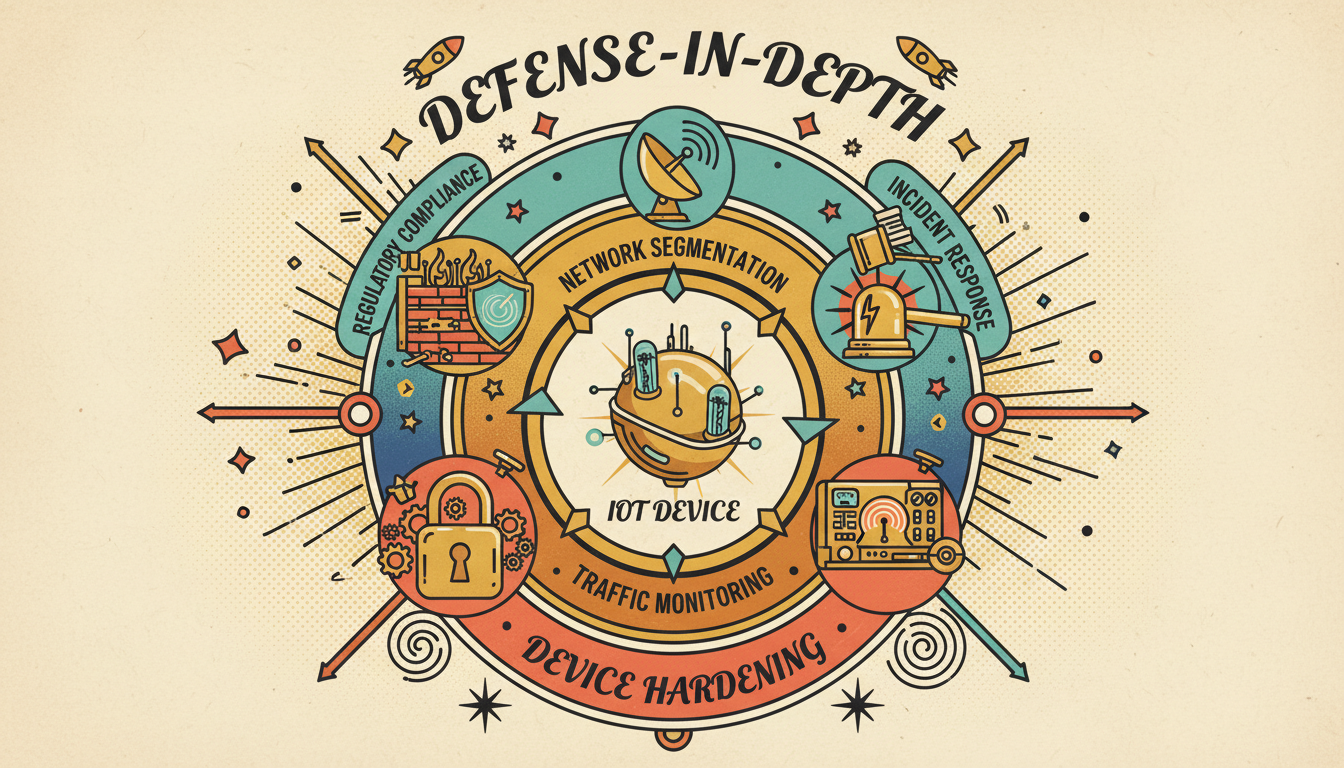
A retro-style defense-in-depth diagram showing concentric protection rings around an IoT device: Device Hardening, Network Segmentation, Traffic Monitoring, Incident Response, and Regulatory Compliance

Advanced Network Monitoring — AI/ML-powered tools for analyzing anomalous activity, behavioral baselines, real-time threat intelligence

Customer Awareness Initiatives — Educational content, device registration systems, vulnerability notifications

Industry Collaboration — Security forums, threat intelligence sharing platforms, standardized IoT security best practices

Incident Response Planning — Comprehensive procedures addressing IoT breaches, regular simulations

Conclusion

Through robust security measures, customer education, and industry collaboration, telcos can effectively mitigate IoT fraud threats while protecting their networks and customers.


Related Articles

5G and a Greener Future: Opportunities and Challenges
Telecoms5G

5G and a Greener Future: Opportunities and Challenges

The rollout of 5G promises unprecedented connectivity but raises critical questions about environmental sustainability and energy consumption.

3 min readRead More
5G and Renewable Energy: Powering a Greener Future
Telecoms5G

5G and Renewable Energy: Powering a Greener Future

5G and renewable energy technologies are converging to revolutionize electricity generation, distribution, and consumption through IoT-enabled smart grids and real-time monitoring.

3 min readRead More
Accelerating Transformation with AI and Green Innovation in Africa
TelecomsCybersecurity

Accelerating Transformation with AI and Green Innovation in Africa

As Africa Industrialisation Week unfolds in Kampala, the focus is on leveraging AI and green practices to drive structural transformation—unlocking sustainable growth, job creation, and stronger environmental stewardship.

3 min readRead More

Ready to discuss your transformation?

Our team has helped operators, banks, and digital brands across four continents navigate complex BSS/OSS challenges. Let's explore how we can help you.

Talk to an ExpertExplore fullCIRCLE NEXT
TAUSPACE

Carrier-grade platforms and advisory for the telecom businesses being built right now.

Phone+27 10 140 6574
Email[email protected]
South African Office1 Montecasino Blvd, The Pivot Block C,
Fourways, South Africa
North American Office16192 Coastal HWY, Lewes, DE 19958,
USA

Platforms

  • fullCIRCLE NEXT
  • Advance.ME
  • 5G charging and policy
  • Digital BSS and commerce
  • Customer value management
  • Modules

Advisory

  • Advisory overview
  • Strategy and business case
  • BSS/OSS migration
  • Bank MVNO advisory
  • Programme assurance

Explore

  • Use cases
  • Experience
  • Clients
  • Insights
  • Contact

TAUSPACE

  • Why TAUSPACE
  • Our story
  • Expertise
  • Partners
  • Careers
PrivacySecurity & data protectionGDPRTerms & conditions
© TAUSPACE. All rights reserved.