


Pioneering the Future: How Will AI Transform Telecoms
Introduction
The telecommunications industry faces a transformation driven by artificial intelligence. As data volumes increase and customer demands evolve, telecom companies are leveraging AI to shape their future operations. This exploration covers AI's applications, benefits, and strategic considerations for navigating this change.
The Current State of AI
The modern telecom landscape includes:
- Rapid technological advancements through 2G to 5G network transitions
- Exponential data growth from smartphones, IoT devices, and data-intensive applications
- Complex, multiplex networks incorporating mobile, fixed-line, satellite, and cloud services
- Consumer and business demands for seamless connectivity, personalization, and immediate support
The AI Revolution
AI essentially represents a discipline that blends computer science with extensive datasets to facilitate problem-solving. The technology encompasses machine learning, deep learning, natural language processing, and computer vision, enabling algorithms to construct expert systems for predictions and classifications.
The Role of AI in Telecommunications
Network Optimization and Management:
- Real-time analysis and resource optimization
- Proactive issue prediction and resolution
- Enhanced reliability and reduced downtime
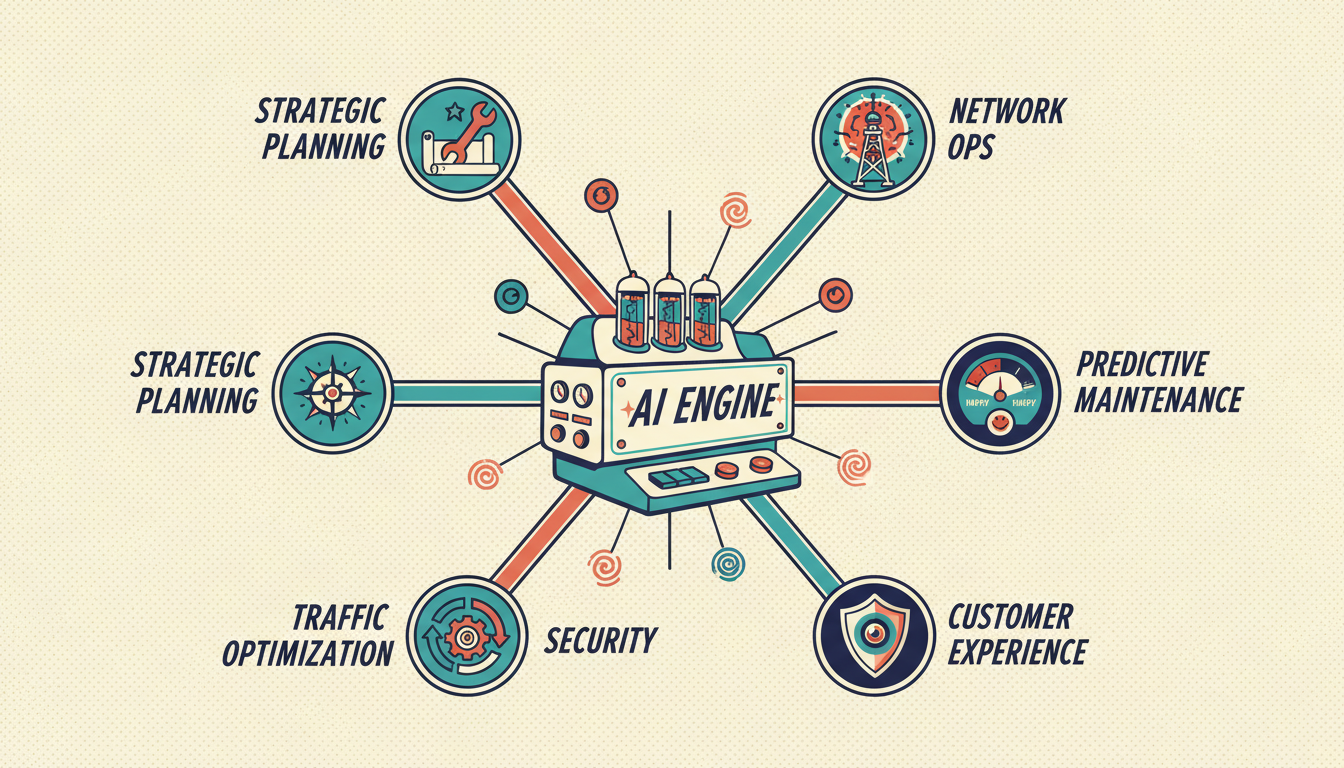
Predictive Maintenance:
- Equipment monitoring before failures occur
- Minimized downtime and operational costs
Customer Experience Enhancement:
- Personalized services through behavior analysis
- Chatbots, virtual assistants, and recommendation engines
Network Security:
- Real-time threat detection and response
- Protection against cyberattacks and data breaches
Traffic Optimization:
- Dynamic routing to minimize latency and congestion
- Critical for 5G and IoT applications
Empowering Customer Service
AI-Powered Chatbots: Natural language processing enables 24/7 customer query handling and technical support.
Virtual Assistants: Voice-enabled account management and service modifications.
Personalized Recommendations: Customized service suggestions based on user data analysis.
Issue Resolution: Predictive problem identification and solution suggestions.
Enhanced Self-Service: AI-driven portals improve account management accessibility.
Network Optimization and Performance
- Predictive Maintenance: Equipment data analysis for timely maintenance scheduling
- Dynamic Resource Allocation: Real-time bandwidth optimization
- Network Slicing: 5G-specific service customization for various applications
- Energy Efficiency: Reduced operational costs and environmental impact
Network Security
- Advanced Threat Detection: Pattern analysis to identify cyber threats
- Behavioral Analytics: Detection of unusual user activity indicating compromised accounts
- Zero-Day Vulnerability Detection: Proactive identification and patching
- Automated Incident Response: Autonomous mitigation reducing response times
Strategic Considerations for Telcos
AI has proven itself essential to telecoms' digital transformation strategy. Key considerations include:
- Data Privacy and Compliance: Ensure adherence to GDPR and CCPA regulations with strong governance practices
- Ethical AI: Transparent, fair, and unbiased decision-making frameworks
- Talent Investment: Build AI expertise through hiring and employee training
- Data Quality: Implement robust data assurance and cleansing processes
- Partnerships and Ecosystems: Collaborate with AI providers, startups, and industry groups
- Scalability: Design infrastructure to handle increasing data volumes and AI complexity
Conclusion
AI represents the driving force for telecommunications industry transformation, enabling enhanced customer experiences, improved network performance, and strengthened security. Forward-thinking technology leaders can leverage these capabilities to remain competitive in the evolving landscape.